
This cascade of events leads to the symptoms of allergy, ranging from hives and swelling to, in severe cases, anaphylaxis. In clinical practice, confirming whether these symptoms are caused by a specific allergen—and whether sensitization is functionally relevant – can be challenging and often requires more than classical IgE testing.
When an allergic reaction occurs, an immune cell encounters an allergen it is already primed to recognize. The cell responds immediately, releasing histamine and other mediators that activate the body’s immune response.
The allergen-induced basophil histamine release assay (a-BHRA)
The a-BHRA (seen below) is a clinically relevant test that can determine whether cells have been primed and are likely to react to a specific allergen. In this version of the BHRA, sensitized basophils are exposed to a suspected allergen—this can be any relevant substance, such as a drug, food, or environmental trigger—to detect histamine and thereby functional IgE. The response is measured as histamine release from the basophils, providing functional insight into whether the allergen can trigger a real allergic reaction.
See sample preparation, submission and shipping further down.
The test has to be performed within 24-48 hours after blood sampling due to the short-lived histamine containing blood basophils. Upon arrival, the laboratory staff dissolves the allergen-containing material to be tested and dilute the sample in order to test the material in several concentrations, or one of RefLab’s standard panels are used (see requisition). Aliquots of 25 µL washed blood are added to the material to let the basophils release their content of histamine. Histamine is detected by selective adsorption to glass microfibers coated in the bottom of microtiter plates. The test can be performed either on the patient’s own basophils or on donor basophils using the patient’s serum.
Adsorbed histamine is subsequently detected fluorometrically in a HISTAREADER®. A readout >10 ng histamine released from the blood sample indicates that the HR-Test is positive.
Allergen-induced basophil histamine release assay (a-BHRA)
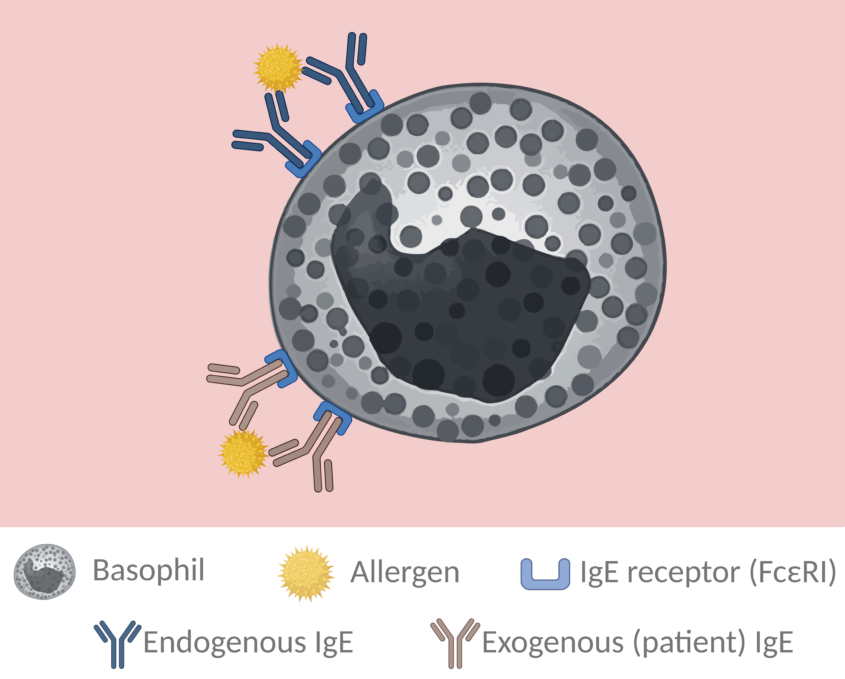
The a-BHRA can be performed using either one of Reflabs standard testing panels (see requisition) or a patient-supplied material, which can be:
- Samples from the environment of the patient
- Medical agents taken by the patient, which are not on our list of testable drugs in stock.
- Special food items not part of our test panel.
Please note, RefLab does NOT accept or test for cytotoxic/chemotherapeutic agents or other toxic agents unless agreed before shipping of sample.
The test result will be returned to the requester within 3-10 business days after receipt of sample.

1. Sample preparation
- Use heparinized whole blood (green tube, no gel)
- Needed for plate analysis: 4 mL
- Needed for single allergens/materials: 1 mL per allergen/material
- Keep at room temperature (do not refrigerate)
2. Sample submission
- Complete the requisition form (print or download)
- Send the completed form via secure email to RefLab (preferred) or include a printed copy with the sample. Please use this button for sending secure email with attachments to us: Send secure email.
- The samples should be shipped during a work week so they are received by RefLab no later than Friday 1pm
3. Shipping
- The sample and requisition form have to be sent in an envelope or transport container for biological samples
- Send the blood sample, requisition form (if not emailed), and any patient-supplied materials** to:
RefLab ApS
Kanalholmen 1, 2. th.
2650 Hvidovre
Denmark