
RefLab offers contract analysis of human clinical samples to evaluate immune and hypersensitivity responses in the context of clinical studies. We work with commercial and academic partners who collect the samples; RefLab does not recruit or treat study participants but acts as a specialized central lab for histamine release testing.
Using our validated s-BHRA and a-BHRA platforms, we analyze serum and other patient-derived samples to:
- Detect and characterize histamine-mediated and pseudoallergic responses
- Monitor changes in histamine release over time during treatment
- Correlate clinical observations with functional biomarker readouts
- Bridge preclinical findings (ex vivo skin model, a-BHRA, PK) to clinical sample data
Serum induced basophil histamine release assay
Our s-BHRA is a functional assay used to assess whether patient serum contains factors that can activate basophils and trigger histamine release. In clinical study settings, s-BHRA can support investigations of urticaria and other histamine-mediated phenotypes, including evaluation of autoimmune mechanisms where serum-driven activation is relevant. The assay provides a standardized readout that can be used to stratify patients, explore mechanism, and monitor changes over time depending on the study design.
As a central laboratory, RefLab receives serum collected by the study site, performs the analysis under defined conditions with appropriate controls, and returns quantitative results suitable for integration with clinical endpoints and other biomarkers.
Allergen induced basophil histamine release assay
Our a-BHRA measures histamine release from basophils after stimulation with a defined trigger, such as a suspected allergen, a drug, or a test compound used in a clinical program. In clinical studies, a-BHRA can be used to probe immediate hypersensitivity or non-IgE (pseudoallergic) activation, to help interpret clinical events by providing a functional effector-cell readout.
We can support study-specific panels and concentration ranges (where scientifically justified), and report results in a format that enables correlation with dosing, adverse event timing, and other clinical observations.
Preclinical services
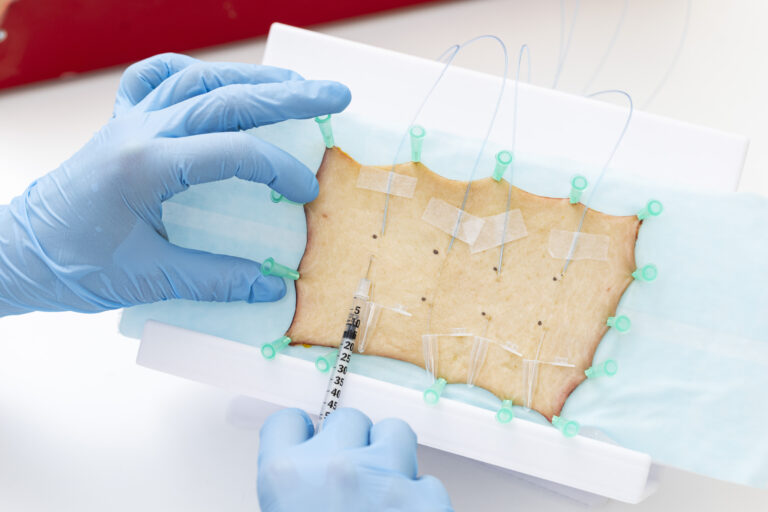
RefLab supports preclinical development with specialized in vitro and ex vivo models designed to predict first-in-human immune and adverse immune responses, including pseudoallergic reactions. Our assays are tailored to new biologics, small molecules and excipients, helping you de-risk clinical entry and optimize study design.

Anaphylaxis screening package
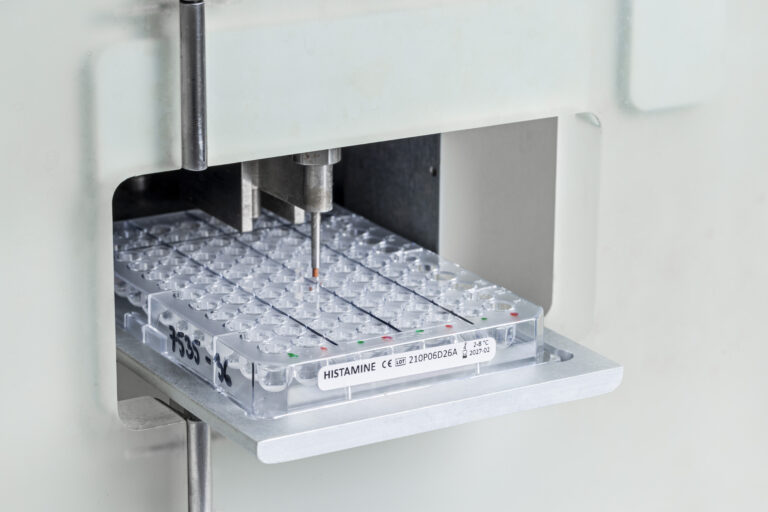
Unexpected allergic reactions are one of the reasons why drug candidates fail in the later development phase. Severe hypersensitivity or anaphylaxis can stop a program abruptly—often after significant time, cost, and animal use. RefLabs’ Pre-Clinical Drug Anaphylaxis Screening Package is designed to address this risk early, when decisions are still flexible and affordable.